Dosing equipment is the 'invisible guardian' in both industrial and everyday life, capable of precise chemical measurement and automatic dosing. It helps eliminate human error, ensures stable processes, and boosts treatment efficiency. From wastewater treatment to healthcare and the food industry, dosing equipment has become a key tool for cutting costs and increasing efficiency. Below, let's take a closer look at its advantages and applications.
1. What is dosing equipment?
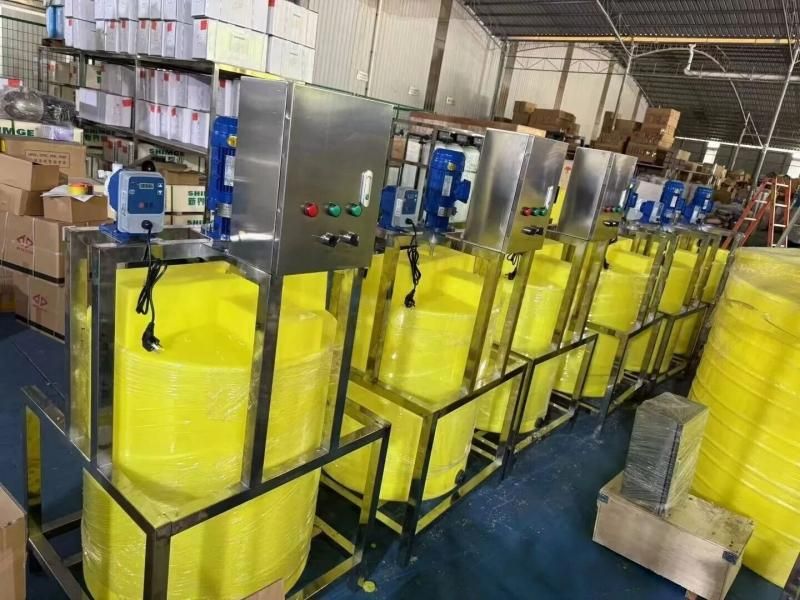
The dosing equipment is an automated system that integrates chemical storage, metering, and intelligent control. Its core function is to accurately add chemicals to achieve water quality management and process optimization. It’s made up of storage tanks, metering pumps, and other components, running fully automatically to maximize the use of chemicals.
Core Advantages of Secondary Dosing Equipment
Compared to manual dosing, smart dosing equipment has clear advantages:
Precise dosing, no waste
High-precision metering pumps paired with intelligent control systems, with accuracy over ±1%, can automatically adjust dosing amounts, saving costs while ensuring effectiveness.
Automatic operation, saves labor
PLC smart control enables full-process automation, no need for dedicated personnel, reducing labor and avoiding contact with chemicals.
Stable and durable, highly adaptable
Made of corrosion-resistant materials, suitable for complex conditions, low failure rate; supports customization to meet the needs of various industries.
Three common application scenarios
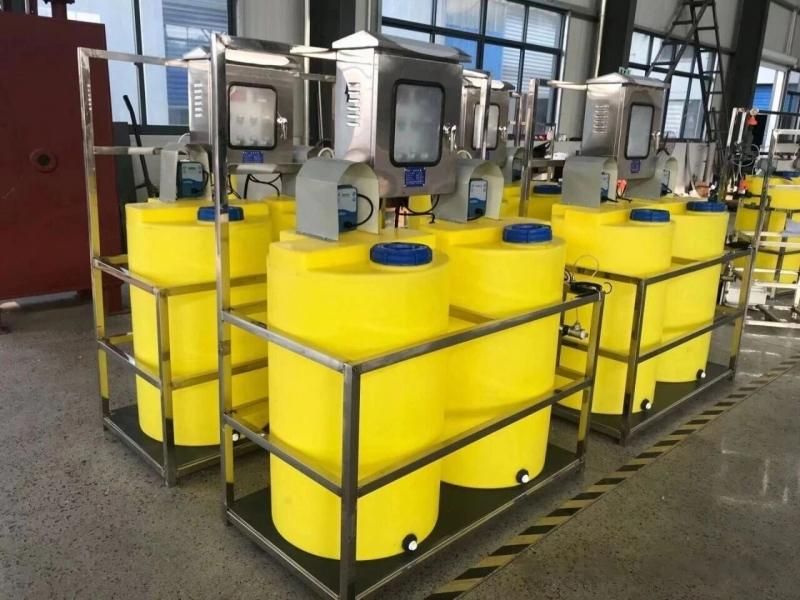
01 Dosing equipment is used across many industries, with key applications including:
▶ Water treatment
Suitable for municipal sewage, industrial circulating water, and water plants, helping to safeguard water resources.
▶ Chemical and petroleum industries
Used for adding catalysts and corrosion inhibitors, ensuring process stability and protecting equipment.
▶ Medical and pharmaceutical industries
Enables disinfectant mixing and process water control, meeting GMP certification requirements.
▶ Food and beverage industry
Used for pH adjustment and equipment sterilization, ensuring food safety.
▶ Other areas
Widely applied in power, environmental protection, agricultural irrigation, and more, supporting green and efficient development.