
Marketing Hotline:
(+86)0532-88988868
(+86)0532-88988868
The commissioning of reverse osmosis (RO) system recovery rates is guided by the core principle of 'step by step, steady progress.' The idea is to gradually approach the optimal operating point while ensuring the system doesn’t scale, overpressure, or lose desalination efficiency. The safest way to do this is as follows:
1. Preparation before commissioning (safety first)
Pre-treatment standards: Make sure the pre-treatment (sand filter, carbon filter, softening, security filter) output meets standards (for example, SDI≤3, residual chlorine ≤0.1ppm, hardness within limits), or else increasing the recovery rate will directly cause membrane scaling.
Check instruments and valves: Confirm that flow meters, pressure gauges, conductivity meters, etc., are reading accurately, the concentrate and product water valves operate normally, and high/low pressure protection interlocks are functioning properly.
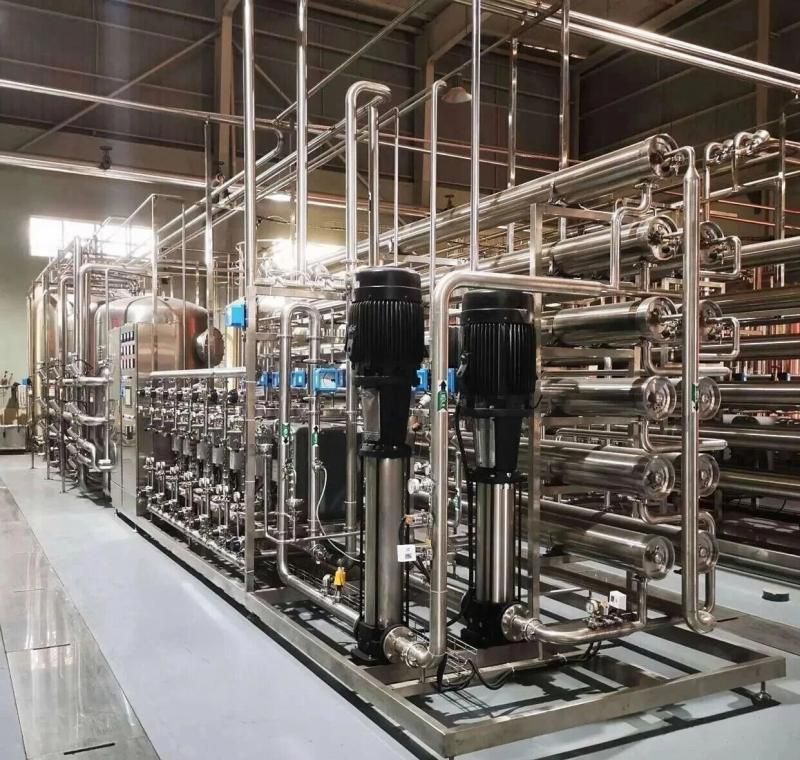
2. Debugging Process (Step by Step)
Starting with a low recovery rate (safe start): At the beginning of debugging, fully open the concentrate valve and perform a low-flow (low-pressure) flush for 10–20 minutes to drain the protective liquid from the membrane and remove air. Set the initial recovery rate to 40%–50% and observe the system's initial operating conditions (pressure at each stage, pressure differences, water quality, and any unusual noises).
Step-by-step fine-tuning (5% each time): Slowly close the concentrate adjustment valve, increasing the recovery rate by 5% each time. After each adjustment, let the system run stably for 10–15 minutes, then observe and record: feed water / product water / concentrate flow, pressures at each stage, pressure differences, and product water conductivity (desalination rate).
Find the 'critical point' and back off (safety margin): If any of the following occurs, it means the recovery rate is approaching the safe limit, and you should immediately reduce it by 5% as the final operating point:
- Noticeable drop in desalination rate: if product water conductivity suddenly rises, it indicates intensified concentration polarization or fouling on the membrane surface.
- Abnormal rise in pressure difference: if the single-stage pressure difference rises >0.05 MPa, or the total system pressure difference >0.2 MPa, it indicates the membrane is at risk of fouling or scaling on the concentrate side.
- Equipment issues: if the pump current exceeds limits or vibration increases, it suggests excessive system resistance or overpressure.
Locking in the optimal operating point: the final recovery rate is usually set about 5% below the 'safety limit', and it needs to ensure: stable pressure difference, stable desalination rate, and low risk of scaling during long-term operation.
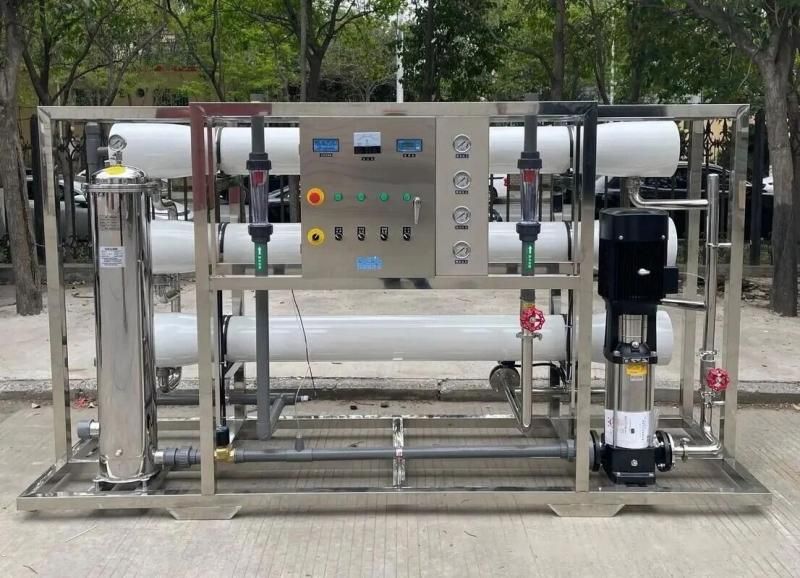
3. Coordinated Debugging of Key Parameters (Ensuring Safety)
Brine Flow Control: The brine flow can't be too low. You need to keep the brine flow of each membrane element above the manufacturer's minimum to prevent concentration polarization from worsening, which can lead to scaling and a sudden rise in pressure difference.
Antiscalant Dosage Matching: When the recovery rate is increased, the brine concentration factor rises, which increases the risk of scaling. You need to adjust the antiscalant dosage according to the changes in recovery rate (for example, if the recovery rate goes up by 10%, increase the antiscalant dosage by 10%–20%).
Feed Pressure Control: When the recovery rate is raised, the brine flow decreases, causing system pressure to rise. It's strictly forbidden to exceed the maximum allowed pressure of the membrane elements to avoid damage due to membrane compression.
Temperature compensation: When the water temperature is low (like in winter), the water is more viscous and the water output decreases. At this time, you shouldn't try to force the recovery rate up by blindly increasing the inlet pressure. Instead, you should slightly lower the recovery rate (by 5%~10%) to protect the system.
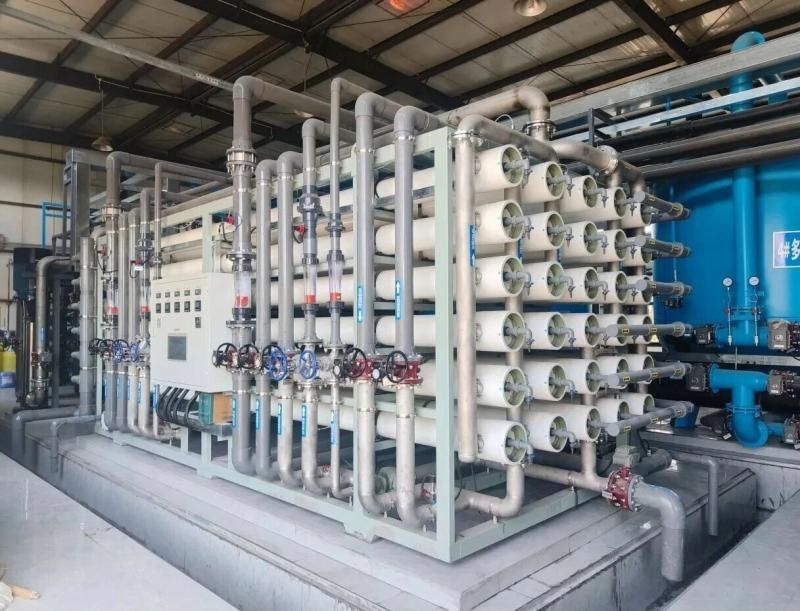
Note: During debugging, never try to 'achieve it in one step' or 'forcefully shut off the concentrate valve' just to get a high recovery rate, or you could easily cause irreversible scaling or mechanical damage to the membrane element.