Marketing Hotline:
(+86)0532-88988868
(+86)0532-88988868
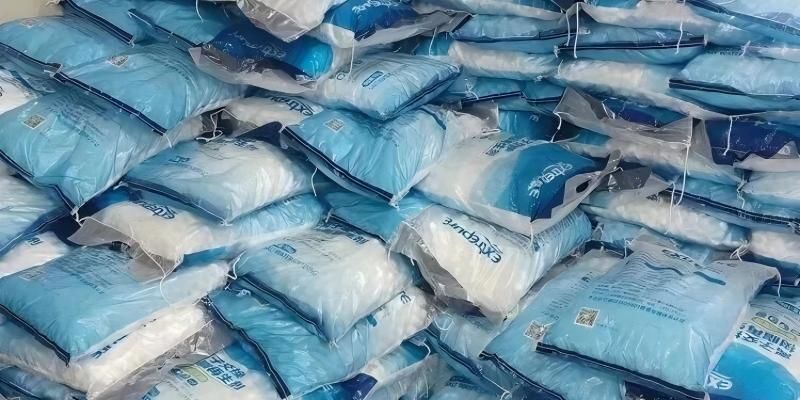
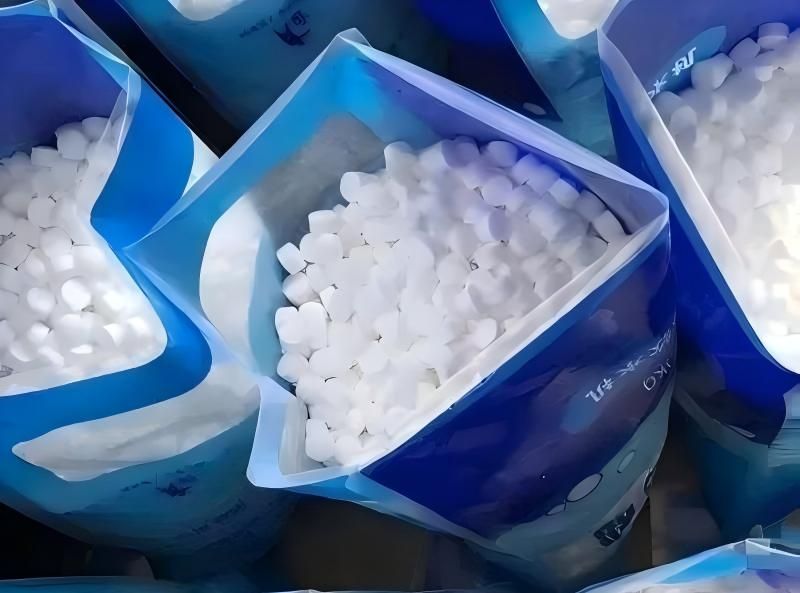
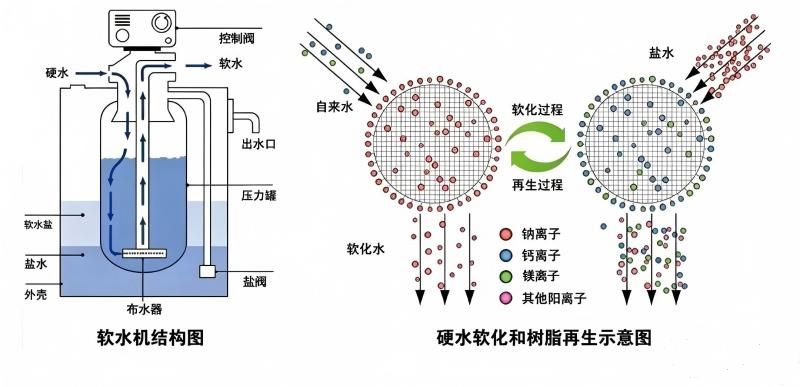
The hard water we often talk about contains ions like calcium and magnesium. These substances can form scale, sticking to the inner walls of equipment, which not only reduces efficiency but can also corrode pipes and cause equipment failures or even shutdowns. The role of water softening salt is to use ion exchange technology to restore the 'softening ability' of the resin in the softening system, continuously turning hard water into soft water suitable for industrial use.
How water softening salt works:
The main ingredient of water softening salt is high-purity sodium chloride. When the resin in the softening system is full of calcium and magnesium ions and loses its softening ability, the sodium ions produced when the water softening salt dissolves can 'replace' the calcium and magnesium ions on the resin. This lets the resin regain its ability to soften water, enabling the resin to be regenerated and used over the long term.
Tips
The purity of water softener salt directly affects its effectiveness. For every 1% drop in purity, the resin's usage cycle shortens by 15%-20%, and it can also cause equipment malfunctions.
Applications of Soft Water Salt
1. Boiler Feed Water Softening
Industrial boilers have very high requirements for incoming water (hardness must be ≤0.03mmol/L). The sodium ions in soft water salt can efficiently replace calcium and magnesium ions in the water, preventing scale from sticking to the boiler walls—scale can reduce boiler heating efficiency by 10%-30% and even pose a risk of pipe bursts.
2. Softening of Circulating Cooling Water Systems
In industries like chemical and power, circulating cooling water systems can use ion exchange resins to soften the water. Soft water salt acts as a resin regenerant, helping the resin continuously remove calcium and magnesium ions, reduce water hardness, minimize scale and pipe corrosion, and also lower the amount of water treatment chemicals needed while improving heat exchange efficiency.
3. Pretreatment for Membrane Separation Systems (RO/UF Systems)
RO and UF membrane systems used in industrial production have very high requirements for feed water, and hard water can cause scaling and damage to the membrane modules. Water softening salts can reduce the hardness of the feed water to below 1ppm, protecting the membrane modules from fouling, reducing the cleaning frequency, extending the membrane lifespan from 1-2 years to 3-5 years, and lowering replacement costs.
4. Industrial Water Softening
In industries like chemicals, pharmaceuticals, and electronics, the water used in production (industrial water) needs to meet strict standards, and hard water can affect product quality. Water softening salts can effectively reduce the hardness of industrial water, ensuring stable product quality and compliance with industry standards (like GMP requirements in the pharmaceutical industry).
Advantages of Soft Water Salt in the Industrial Water Treatment Industry (Compared to Regular Industrial Salt)
1. Rock salt raw material, protects resin: Selected deep well rock salt with a purity of ≥99.7% and very low impurity content, effectively preventing resin contamination and ensuring long-term stable operation.
2. Highly efficient regeneration, saves time and material: Uniform particle size, high dissolution efficiency, requires less amount during regeneration (only 80-160g per liter of resin), achieves good regeneration effect, and is over 20% more efficient than regular industrial salt.
3. Gentle care, reduced wear and tear: Free of iodine, anti-caking agents, and heavy metals, it won’t corrode equipment, clump, or bridge, making operation more stable;
4. Standard compliant, scenario adaptable: Meets industrial salt standards, supports customization, and can meet the water use needs of different industries and various industrial scenarios.