
Marketing Hotline:
(+86)0532-88988868
(+86)0532-88988868
Ultrafiltration membrane clogging is a pretty troublesome issue in electrophoretic coating workshops. There are many reasons why the membranes get clogged, so let's talk about some common ones.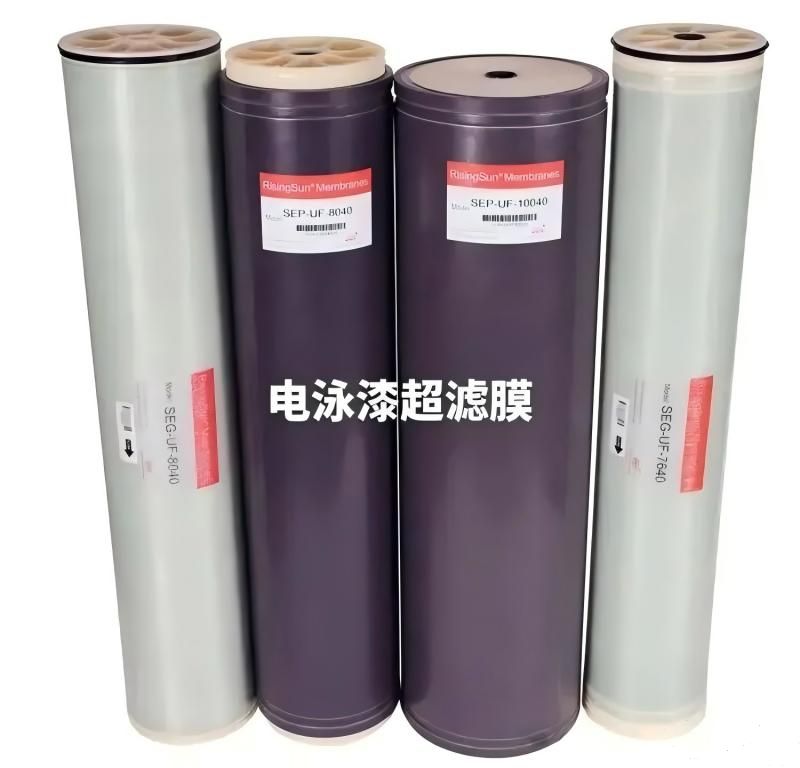
1. Filtration part
The ultrafiltration membrane has tiny pores that allow water, small molecular solvents, and low molecular weight resin molecules to pass through. If the electrophoretic paint goes directly into the ultrafiltration membrane without passing through any filters beforehand, particles, pigments, additives, solvents, and other impurities that haven’t been completely removed can block the membrane pores. This shortens the cleaning cycle and reduces the lifespan of the membrane, so it’s important to check whether the initial filtration setup is adequate and running properly.
2. Equipment operation
Normally, the ultrafiltration system shouldn’t be stopped randomly during operation, because when it stops, the paint can settle inside the ultrafilter, which easily leads to membrane clogging. Production control should be strengthened in this regard. If the issue is caused by a power outage, there should be a contingency plan ready.
3-Tank Solution Contamination
Contamination of the tank solution can cause microorganisms, like mold and bacteria, to grow in the coating system. These microorganisms can form biofilms on the surface of the ultrafiltration membrane, which can clog the membrane pores. We should first check the tank solution parameters—like solid content, conductivity, pH, and voltage—to make sure they're within the process-specified range and rule out any sources of contamination.
Also, after using the electrophoretic tank solution system and ultrafiltration membrane setup for a while, bacteria can grow, which can lead to coating problems like rough paint or increased film thickness. In this case, a specialized sterilizing solution and procedure should be used to clean it.
4. Operation Aspects
If the ultrafiltration system is not operated properly, such as insufficient backwashing or untimely system cleaning, it can lead to ultrafiltration membrane clogging. This is because the ultrafiltration membrane gradually gets blocked due to concentration polarization, so regular cleaning is needed. Cleaning is done in a circulation way, and the cleaning part doesn't necessarily need a heating device. Usually, by briefly running the cleaning pump, electrical energy is converted into mechanical energy, which raises the cleaning solution to the required temperature.
Additionally, you can install a glass rotor flow meter and a turbidity meter in the system to monitor changes in permeate flow and check if the ultrafiltration membrane is damaged.