Marketing Hotline:
(+86)0532-88988868
(+86)0532-88988868
Groundwater is a valuable water resource found in saturated aquifers beneath the surface. Compared to surface water, it has multiple advantages, such as clean water quality, stable supply, less external pollution, and minimal temperature fluctuations. For these reasons, groundwater has become an important water source for industries and mines, agricultural irrigation, urban water supply, and central air conditioning circulation. Especially in today's context of water shortages and increasing supply-demand pressure on surface water, the extraction and efficient use of groundwater has long been a key measure to ease water pressure and ensure stable production and daily life.
During its formation, groundwater dissolves calcium and magnesium ions from rocks over a long period, which makes its hardness generally high—this is the most notable water quality drawback. If high-hardness groundwater is used directly in industry, a series of serious problems can occur: calcium and magnesium ions easily form scale like calcium carbonate and magnesium carbonate when heated, sticking to boilers, heat exchangers, and pipe walls. This can clog pipes, reduce heat transfer efficiency, significantly increase energy consumption, corrode equipment, shorten its lifespan, and even cause equipment failure and safety hazards. At the same time, hard water cannot meet the precise water needs of industries like textiles, food, and chemicals, directly affecting product quality. Therefore, before groundwater can be used industrially, it must undergo professional softening treatment, and dedicated water softening equipment is the core device to achieve this goal.
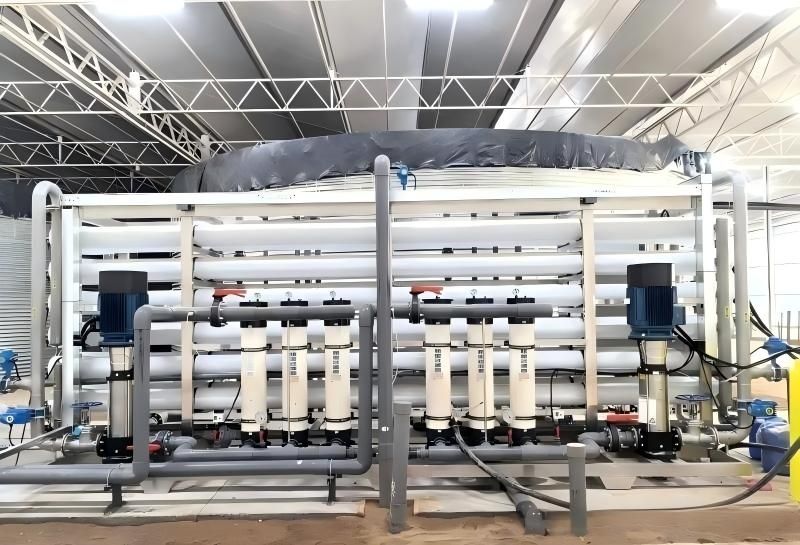
For the high hardness of groundwater, the commonly used groundwater softening equipment in both industrial and residential areas is professional water softeners. These are currently the most widely used and technologically mature groundwater softening devices. Their main function is to accurately remove calcium and magnesium ions from the water, significantly reduce total hardness, and at the same time improve water quality, prevent scale formation, making groundwater completely suitable for all kinds of water usage.
01 Core Workflow: Five-Step Standardized Process
Water softening equipment uses ion exchange technology. Through built-in cation exchange resin, it replaces the calcium and magnesium ions in the water. The entire treatment process is standardized and controllable, divided into five core steps, each linked to the next to ensure the softening effect.
Backwash: After the equipment starts, it first backwashes the resin layer to loosen it, removing mud, impurities, and other particles trapped on the resin surface. This prevents clogging from affecting the exchange efficiency and prepares the resin for the next ion exchange;
Salt absorption (regeneration): This is the key step where the resin regains its exchange capacity. The equipment automatically draws in a special soft water salt solution, allowing the saturated solution to fully contact the resin that has absorbed calcium and magnesium ions, displacing the calcium and magnesium ions and restoring the resin’s exchange function;
Slow rinse (displacement): The resin layer is slowly rinsed with clean water to fully flush out the remaining salt solution and displaced calcium and magnesium ions. This also further activates the resin, ensuring the effectiveness of subsequent softening;
Fast rinse: The resin layer is then finally rinsed at a faster flow rate to completely remove any leftover impurities, salt solution, and wastewater from the tank, making sure the water meets quality standards and has no strange odors;
After these five steps of complete treatment, calcium and magnesium ions are completely removed from the water, leaving only water molecules and a small amount of sodium ions. The hardness drops to a qualified range, solving scaling problems from the root, and the water is ready for use in various settings.
02 Main types of equipment: manual and automatic
The groundwater softening equipment on the market is mainly divided into two categories: manual and automatic, catering to users with different scales and operational needs.
Manual Water Softening Equipment: Simple structure and low cost, suitable for small-scale scenarios with low water usage and sufficient maintenance staff. After installation, professional engineers provide on-site training on operating procedures, including manual control of backwashing, salt absorption, and rinsing. It's ideal for small industrial or agricultural users with limited budgets and single water needs.
Automatic Water Softening Equipment: Equipped with an intelligent control system, it can run fully automatically without supervision. It can automatically trigger regeneration and rinsing processes based on water usage and hardness. The operation is convenient, running is stable, and water quality is consistent. It's suitable for medium to large enterprises, continuous water use scenarios, and unmanned water supply systems, making it the mainstream choice in the industrial sector today.
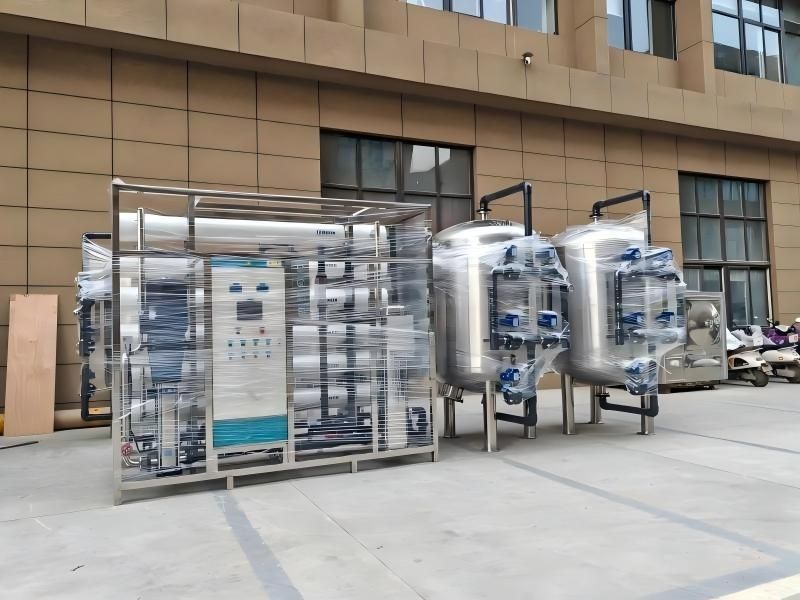
Ultra-pure water equipment isn't just a single process device; it's a systematic setup that integrates multiple advanced water treatment technologies. It can flexibly combine processes and precisely control water purity according to the actual water quality needs for monocrystalline silicon production. The mainstream preparation processes are as follows:
Key Points for Selecting Groundwater Softening Equipment
Groundwater softening equipment isn't one-size-fits-all. Choosing the right type needs to match your actual water usage. Selecting blindly can lead to poor softening results, high energy consumption, and wasted equipment. The main points for selection are as follows:
1. Type of water system: Be clear about the purpose of the softened water—whether it's for boiler make-up water, cooling systems, heat exchange systems, central air conditioning, or process water for production. Different systems have different requirements for water hardness and supply stability, and the equipment setup will vary accordingly.
Hourly water usage: This is the key factor in determining the size of the equipment. The treatment capacity of the equipment covers everything from small units handling 1 ton per hour to large industrial units exceeding 1,000 tons per hour, meeting the water needs of anything from small workshops to large industrial enterprises. When choosing equipment, you should leave some extra capacity to avoid water shortages during peak times.
3. Water usage schedule: Differentiate between continuous and intermittent water use. If 24-hour uninterrupted water supply is needed, it's recommended to choose automatic equipment with two tanks running alternately to ensure no supply interruption. If water is used at set times, a single-tank system can be chosen to reduce costs.
4. Incoming water hardness: Groundwater hardness varies greatly by region, so the raw water hardness should be tested in advance. In areas with high hardness, choose equipment with a larger resin fill and regeneration frequency that matches the needs, and if necessary, pair it with pre-treatment equipment to ensure the softening effect meets standards.
Widely Used Applications of Water Softening Equipment
After softening, groundwater becomes highly versatile. Water softening equipment can be widely adapted across various fields, with key applications including:
1. Industrial Boiler Systems: Completely prevent scale formation, improve boiler thermal efficiency, reduce fuel consumption, extend boiler lifespan, and ensure safe boiler operation;
2. Cooling and Heat Exchange Systems: Prevent scaling on heat exchangers and cooling pipes, maintain stable heat transfer efficiency, avoid equipment blockages and corrosion, and reduce maintenance frequency;
3. Central air conditioning circulating water system: Ensure the circulation pipes are clear to avoid reduced cooling and heating efficiency, and lower maintenance costs;
4. Industries like textile dyeing, food processing, and chemicals: Meet the water requirements for precise production, prevent high hardness water from affecting product color, texture, and quality, and improve the pass rate of finished products;
5. Agriculture and residential areas: Suitable for large-scale agricultural irrigation, water supply for large venues, and softening water for residential use, improving water quality.
Groundwater is a high-quality water resource, but its high hardness limits direct industrial use. Professional water softening equipment is the best solution to this problem. Using mature ion exchange technology and standardized treatment processes, it can efficiently remove calcium and magnesium ions, turning hard groundwater into scale-free, highly adaptable soft water. It also supports both manual and automatic operation modes, and its scale can be flexibly customized to meet water use needs in different regions and scales.
When choosing equipment, companies and users should test groundwater hardness in advance, calculate water usage, and clarify the usage scenarios to select the right type of equipment. This approach maximizes the use of groundwater, avoids various issues caused by scaling, reduces production and maintenance costs, and makes water use efficient and safe.