
Marketing Hotline:
(+86)0532-88988868
(+86)0532-88988868
Preface
Flocculation and sedimentation is the process in which particulates flocculate and settle in water. After adding a coagulant to the water, the colloids and dispersed particles among the suspended solids form flocs under the interaction of molecular forces, and during the settling process, they collide and aggregate with each other, continuously increasing in size and mass, and their settling velocity keeps increasing.
After adding a coagulant to surface water, flocs are formed; in domestic sewage, organic suspended solids; and in activated sludge, the phenomenon of flocculation and sedimentation occurs during the settling process.
01 Flocculation and Sedimentation
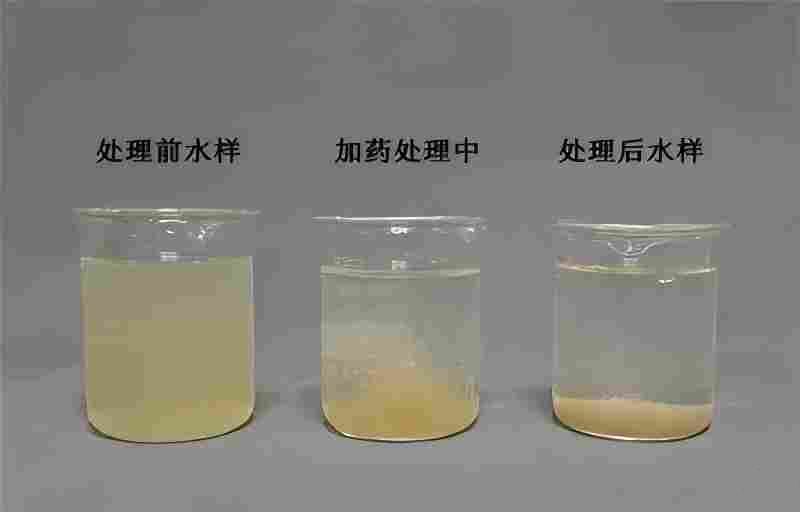
Flocculation and sedimentation is the process in which particulate matter undergoes flocculation and sedimentation in water. After adding coagulants to the water, the colloids and dispersed particles of the suspended matter form flocs under the interaction of molecular forces, and during the settling process, they collide and coagulate with each other, with their size and mass continuously increasing, and the settling rate continuously rising.
The removal rate of suspended matter depends not only on the settling velocity but also on the settling depth. The formation of flocs after adding coagulants to surface water, the organic suspended matter in domestic sewage, and the activated sludge during sedimentation all exhibit the phenomenon of flocculation and sedimentation.
02 Flocculation and Sedimentation Method
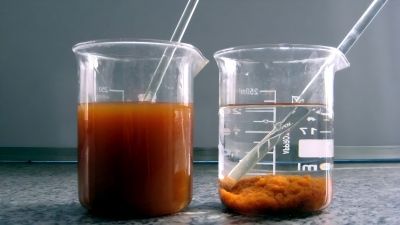
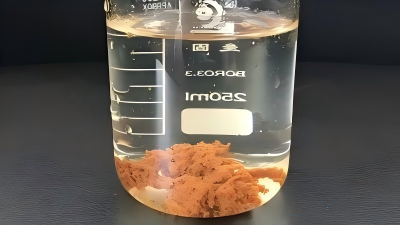
By selecting inorganic flocculants and organic anions to prepare a solution and adding it to the wastewater, a compressed double layer is generated, causing the suspended particles in the wastewater to lose stability. The colloidal particles coagulate with each other, causing the particles to grow and form flocs. Once the flocs grow to a certain size, they settle out of the aqueous phase under the action of gravity, thereby removing a large amount of suspended solids from the wastewater and achieving the effect of water treatment. To improve separation efficiency, coagulants can be added at the appropriate time and in appropriate amounts.
03 Flocculant and Sedimentation Agent
1. Ferrous Sulfate
Ferrous sulfate as a flocculant: The most widespread use of ferrous sulfate is as a flocculant. As a flocculant, it has the following advantages: fast sedimentation rate, large sludge particles, small and compact sludge volume, good decolorization effect (very suitable for treating textile wastewater from dyeing and washing), non-toxic and beneficial for biological growth (very suitable for wastewater treatment systems with subsequent biochemical treatment processes), does not require changing the original process, and is inexpensive. As a flocculant, ferrous sulfate can replace polyaluminum, basic aluminum chloride, polymeric iron, aluminum sulfate, ferric chloride, and others.
Principle: Under acidic conditions, adding reducing agents such as ferrous sulfate, sodium sulfite, sodium bisulfite, sulfur dioxide, etc., reduces hexavalent chromium to trivalent chromium. Then, adding sodium hydroxide, calcium hydroxide, lime, etc., adjusts the pH value, causing trivalent chromium hydroxide to precipitate and separate from the wastewater.
Treatment process flow: Cr6-containing wastewater → adjustment tank → reduction reaction tank → coagulation reaction tank → sedimentation tank → filter → pH adjustment tank → discharge.
2. Polyferric Chloride
Polyferric Chloride, abbreviated as PAC, is a cationic inorganic polymer flocculant with multiple hydroxyl groups and multi-nuclear complexes. The solid product appears as a light yellow or reddish-yellow powder, and its molecular formula is [Al2(OH)nCl6-n]m, with n≤5 and m≤10. Due to the presence of varying amounts of hydroxyl groups, when polyferric chloride is added to turbid source water, it continues to hydrolyze under the pH conditions of the source water.
During the hydrolysis process, a series of physical and chemical processes such as coagulation, adsorption, and precipitation occur, thereby achieving the purpose of purification. The notable features of polyferric chloride are its obvious water purification effect, fast flocculation and sedimentation speed, wide pH adaptability, low corrosiveness to pipeline equipment, and effective removal of water color, SS, COD, BOD, as well as heavy metal ions such as arsenic, lead, and mercury. It has low water treatment costs, high efficiency, simple operation, and saves labor and materials. This product is widely used in drinking water, industrial water, and wastewater treatment.
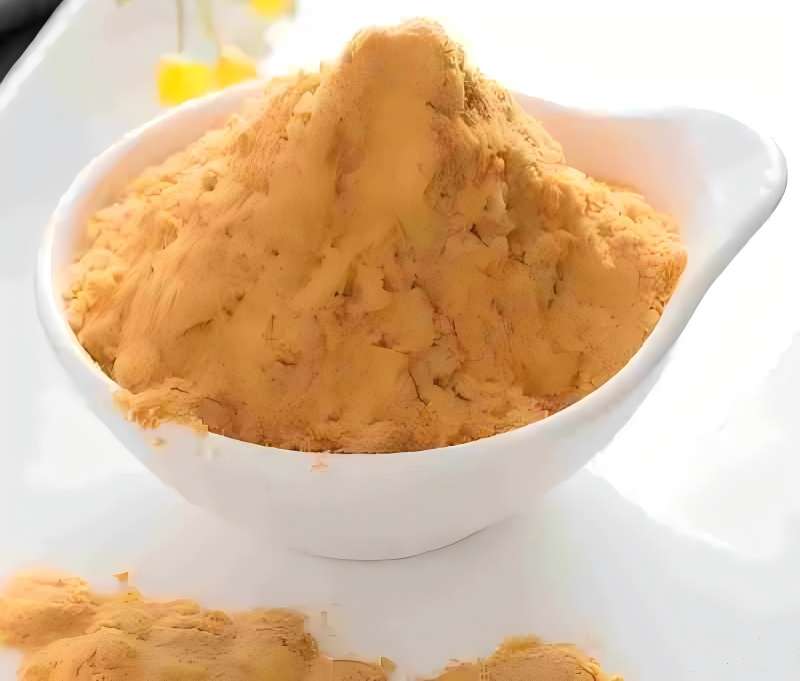
Characteristics of Poly Aluminium Chloride:
(1) The floc forms quickly, has good activity, and good filterability.
(2) No alkaline additives are required, and its effect remains unchanged if it becomes deliquescent.
(3) Wide pH adaptability, strong suitability, and wide application.
(4) The treated water has low salinity.
(5) Can remove heavy metals and radioactive substances from water pollution.
(6) High content of active ingredients, easy to store and transport.
3. Basic Ferric Chloride
Basic ferric chloride is a new type of inorganic polymer coagulant that was officially put into industrial production and application in the late 1960s. It is made by refining, processing, and polymerizing industrial aluminum ash and activated bauxite as raw materials. This product has high activity and demonstrates good purification effects on industrial wastewater, papermaking water, and dyeing wastewater. It has a series of advantages, including low dosage, high purification efficiency, and low cost.
Basic ferric chloride is divided into standard basic ferric chloride (produced from two types of raw materials) and composite basic ferric chloride (produced from four types of raw materials, mainly used for acidic water, fermentation water, and providing good decolorization effects).
Polysulfate ferric iron has a pale yellow amorphous powder form, is highly soluble in water, and a 10% (weight) aqueous solution is a red-brown transparent solution with hygroscopic properties. Polysulfate ferric iron is widely applied in the purification and treatment of drinking water, industrial water, various industrial wastewater, urban sewage, and sludge dewatering.
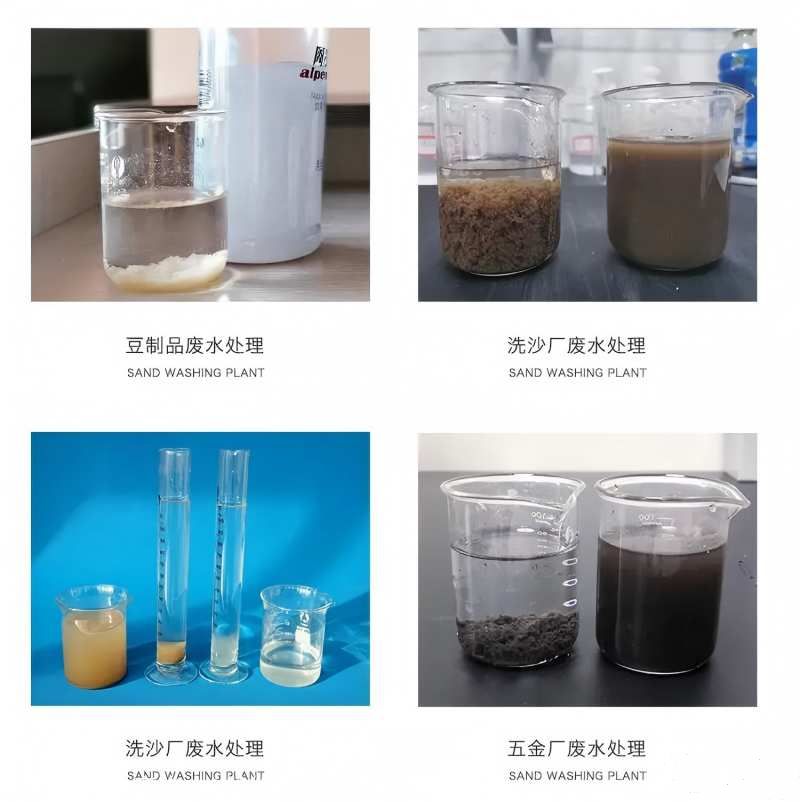
Compared with other inorganic flocculants, polyferric sulfate has the following characteristics:
(1) A new, high-quality, and high-efficiency iron salt-based inorganic polymer flocculant;
(2) Excellent coagulation performance, dense floc formation, and fast sedimentation rate;
(3) Superior water purification effect, producing good water quality; free of aluminum, chlorine, and heavy metal ions, with no water-phase transfer of iron ions; non-toxic, harmless, safe and reliable;
(4) Remarkable effects in turbidity removal, decolorization, oil removal, dewatering, sterilization, deodorization, algae removal, and removal of COD, BOD, and heavy metal ions in water;
(5) Adaptable to a wide pH range of 4-11, with an optimal pH range of 6-9; minimal change in raw water pH and total alkalinity after purification; low corrosiveness to treatment equipment;
(6) Significant purification effects on slightly polluted water, water containing algae, and low-temperature or low-turbidity raw water; especially effective for high-turbidity raw water purification.
Low dosage, low cost, and treatment expenses can be reduced by 20%-50%.