
Marketing Hotline:
(+86)0532-88988868
(+86)0532-88988868
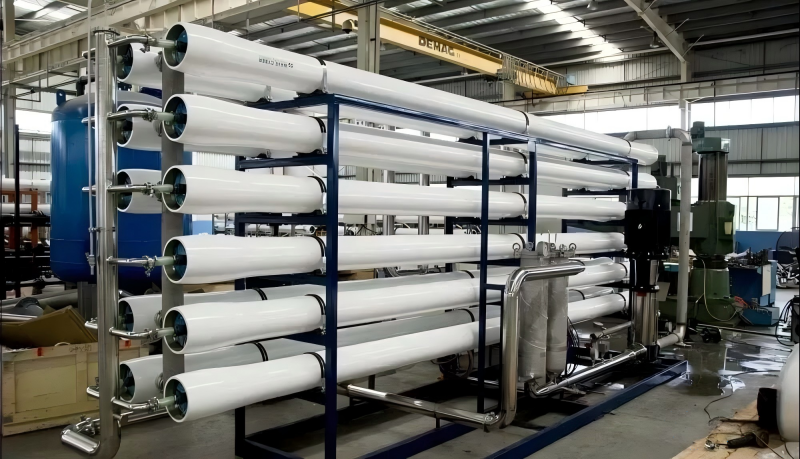
Reverse osmosis (RO) technology is the core process in the field of water treatment, but its key component—the RO membrane—can easily fail due to scaling from calcium, magnesium, and other ions in the water. The proper addition of antiscalants can effectively extend the membrane's lifespan and improve water purification efficiency. However, how can the dosage be calculated scientifically? Today, let's take a closer look!
1. Mechanism of Scale Inhibitors
Scale inhibitors prevent inorganic salt ions in water (such as Ca²⁺, Mg²⁺) from crystallizing into scale on the membrane surface through complexation, dispersion, solubilization, and other effects. Its core advantages are:
(1) No need for acid: avoids acidic corrosion of equipment
(2) Broad applicability: suitable for different water qualities and membrane materials (such as TFC membranes, CA membranes)
Monthly dosage (kg) = Feed water flow rate (m³/h) × Chemical dosage (ppm) × Operating time (h/day) × Number of days (days) ÷ 1000
Feed water flow rate (Q): usually 1.3-1.5 times the production water volume (e.g., if production is 75 tons/hour, feed water is about 100 tons/hour)
Chemical dosage (S): recommended 3-8 ppm (i.e., 3-8 grams per ton of water)
Operating time (H): daily operating hours of the equipment (e.g., 24 hours continuous operation)
(3)Example Demonstration
Assume an RO system:
Water production 75 tons/hour → Feed water 100 tons/hour
Chemical dosage 3 ppm
Operating 24 hours per day, 30 days per month
Monthly usage = 100 × 3 × 24 × 30 ÷ 1000 = 216 kg
(4)Short-term Usage Calculation
If you need to calculate weekly or daily usage, just adjust the number of days. For example, in the above case, the weekly usage is 216 kg ÷ 4 ≈ 54 kg.
2.Dosing Methods and Precautions
(1)Dosing Location
Scale inhibitor should be added before the security filter (precision filter) and continuously injected into the pipeline through a metering pump.
(2)Preparation of Chemicals
Dilution ratio: the stock solution can be used directly or diluted no more than 10 times (concentration ≥10%).
Preparation example: 25 kg chemical + 125 kg RO permeate → diluted 6 times, total 150 L.
Frequency of preparation: it is recommended to prepare a 5-7 day supply to avoid chemical contamination or frequent handling.
(3) Metering Pump Adjustment
Calculation formula: Dosage per minute (g) = Inlet water flow (m³/h) × Dosing concentration (ppm) ÷ 60.
Example: For an inlet water flow of 2.5 tons/hour and a dosing concentration of 2 ppm → 5 g of stock solution is needed per hour. If the diluted concentration is 20 g/L, the metering pump flow should be adjusted to 0.25 L/h.
3. Key Factors Affecting Dosage
(1)Water quality characteristics: Water with high hardness and high silica content requires an increased dosage.
(2) Operating parameters: Recovery rate, temperature, and pH value all affect the tendency to scale.
(3)Type of chemical: Different brands of scale inhibitors have significant differences in recommended concentrations and should refer to the manufacturer's instructions.
4. Common Misconceptions and Optimization Recommendations
(1)Misconception: Blindly increasing the chemical dosage. Excessive dosing may cause membrane fouling or chemical waste.
(2)Recommendation: Regularly test water quality and dynamically adjust the dosage using software simulations (such as RO design software).
(3)Scientifically calculating the amount of antiscalant is key to ensuring the efficient operation of the reverse osmosis system. From formula derivation to practical case studies, this article hopes to provide you with clear guidance. For personalized solutions, it is recommended to optimize together with a water quality report and professional engineers!