
Marketing Hotline:
(+86)0532-88988868
(+86)0532-88988868
The integrated sewage treatment equipment combines a primary sedimentation tank, first and second-stage contact oxidation tanks, a secondary sedimentation tank, and a sludge tank into a single unit. Aeration is carried out in the first and second-stage contact oxidation tanks, effectively combining the contact oxidation method with the activated sludge method. This not only incorporates the advantages of both methods but also overcomes their drawbacks, further improving the level of sewage treatment.
One Explanation of the Wastewater Treatment Process
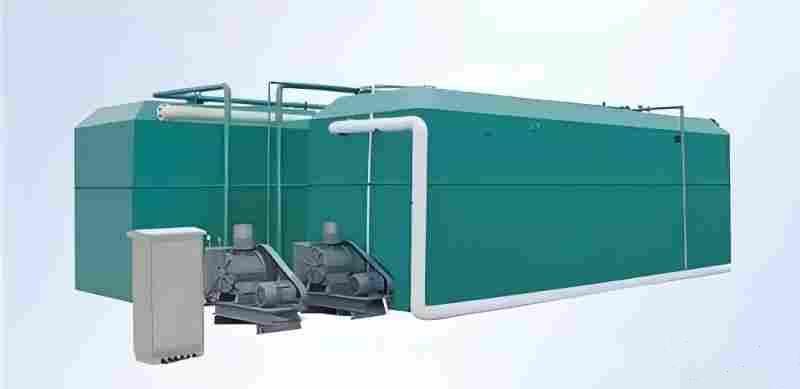
This project adopts the biofilm method: anoxic ---- aerobic (A/O) treatment process. A/O, that is, the anoxic-aerobic biological contact oxidation method, is a mature biological treatment process with advantages such as high volumetric load, fast biodegradation rate, small land occupation, low infrastructure investment, and low operating costs. It can replace the conventional activated sludge method used in urban sewage treatment and is especially suitable for the treatment of medium- and high-concentration industrial wastewater, with low investment, small land use, and high treatment efficiency. This process combines biological contact oxidation with a sedimentation phase, making the process mature and reliable. In the equipment, some of the settled sludge is further oxidized and decomposed due to the action of dissolved oxygen, while some is returned to the grit and sedimentation tank. The system sludge only needs to be regularly removed from the grit and sedimentation tank. The operating programs of the main control equipment in the system, such as blowers and submersible sewage pumps, are input into a PLC to achieve automatic operation, reducing the workload of manual operation and minimizing unnecessary human damage.
1. Grille:
After the wastewater from production is collected through the pipe network system, it enters the subsequent treatment system through a coarse grille. The coarse grille is mainly used to intercept large floating debris in the wastewater, ensuring the normal operation of subsequent treatment structures and effectively reducing the treatment load, thereby providing a guarantee for the long-term normal operation of the system.
2. Wastewater Equalization Tank:
Used to regulate water volume and even out water quality, allowing wastewater to enter subsequent treatment units more uniformly. A pre-aeration system is installed in the equalization tank to enhance the system's shock resistance, reduce the odor of wastewater in an anaerobic state, and also decrease the design scale of subsequent treatment units. Submersible pumps are installed in the tank to lift the wastewater to the following treatment units.
3. Anoxic Tank:
Elastic fillers are installed in the anoxic tank to trap fine suspended solids in the wastewater and remove some of the organic matter. The nitrified liquid returned to this anoxic tank undergoes denitrification, which improves the removal rate of ammonia nitrogen in the wastewater. After anoxic treatment, the wastewater enters the aerobic biological treatment tank.
4. Contact Oxidation Tank:
Most of the organic matter in the raw wastewater is degraded and purified here. Aerobic bacteria use the filler as a carrier and utilize the organic matter in the wastewater as a nutrient source, breaking it down into inorganic salts to achieve purification. For aerobic bacteria to survive, there must be sufficient oxygen, meaning enough dissolved oxygen in the wastewater to accomplish the biochemical treatment. Air for the aerobic tank is provided by a blower. The tank uses a new type of semi-flexible biological filler with a large specific surface area, long service life, easy biofilm attachment, and corrosion resistance. The tank bottom is equipped with microporous diffusers, which provide high oxygen transfer efficiency along with advantages such as light weight, aging resistance, clogging resistance, and long service life.
The two main components in the contact oxidation tank are:
Filler: This process uses a new type of three-dimensional elastic filler, a densely layered high-efficiency biochemical filler. This filler has a large specific surface area, long service life, easy biofilm attachment, and corrosion resistance. Additionally, it has a certain stiffness, which allows it to slice the bubbles in the wastewater in multiple layers, improving dissolved oxygen efficiency. Interactions between fillers do not easily form clusters, preventing blockages in the oxidation tank.
Diffuser: This process uses a microporous diffuser, which has a higher oxygen transfer rate compared to other diffusers. Its main features include non-aging, lightweight, and long service life, along with corrosion resistance and clogging prevention.
5. Sedimentation Tank:
After being treated in the biological contact oxidation tank, the wastewater flows by gravity into the secondary sedimentation tank to further settle and remove detached biofilm and some organic and inorganic small particles. The sedimentation tank works based on the principle of gravity: when wastewater containing suspended solids flows from bottom to top, the solids settle due to gravity. The water discharged after sedimentation in the secondary tank is clearer and more transparent. The secondary sedimentation tank is an upflow-type tank, and sludge is regularly pumped to the sludge digestion tank using a sludge pump. The treated water after sedimentation then enters the subsequent treatment equipment.
6. Disinfection Tank
After wastewater settles, virus and E. coli levels still do not meet discharge standards. To eliminate viruses and E. coli, chlorine tablets are added for disinfection. Using a baffle design and relying on its own gravity, the water is directly discharged into nearby municipal pipelines.
7. Sludge Digestion Tank:
The excess sludge discharged from the sedimentation tank undergoes aerobic digestion and stabilization in the tank to reduce sludge volume and improve sludge stability. The amount of sludge after aerobic digestion is relatively small and is regularly removed and transported by sanitation department sludge trucks or treated with sludge dewatering before transportation. The supernatant is returned to the adjustment tank.
8. Blower:
Used for aeration in the contact oxidation tank, pre-aeration in the adjustment tank, and aerobic digestion treatment in the sludge digestion tank.
Two Introduction to Integrated Wastewater Treatment Equipment
1. The wastewater treatment consists of secondary tanks made of steel structures with shallow burial depth. The steel structure tanks are coated with a domestically pioneered interpenetrating network anti-corrosion coating. This is a polymer formed by interpenetrating rubber and plastic networks, which is resistant to acids, alkalis, salts, gasoline, kerosene, aging, and abrasion, and provides rust prevention. After the equipment is coated with this material, the anti-corrosion lifespan can reach more than 12 years.
2. The AO biological treatment process in the wastewater treatment equipment uses a plug-flow biological contact oxidation tank. Its treatment performance is superior to that of fully mixed or second- and third-stage series fully mixed biological contact oxidation tanks. Moreover, it has a smaller volume than an activated sludge tank, strong adaptability to water quality, good impact resistance, stable effluent quality, and does not produce sludge bulking. At the same time, the biological contact oxidation tank uses a new type of elastic three-dimensional filler, which has a large actual specific surface area, facilitates microbial film attachment and detachment, and under the same organic load conditions, has a higher removal rate of organic matter than other fillers. It can also improve the dissolution of oxygen from the air into the water.
3. In the AO biological treatment process, a biological contact oxidation tank is used, whose filler has a relatively low volumetric load, and microorganisms are in their own oxidation stage, resulting in a smaller amount of sludge. In addition, the water content of the sludge produced by the biological contact oxidation tank is much lower than that of the sludge produced by the activated sludge tank. Therefore, the amount of sludge generated after the sewage passes through the wastewater treatment equipment is small, generally requiring sludge removal only about once every 90 days.
4. In addition to using conventional blower noise reduction measures (such as vibration isolation pads and mufflers), the integrated sewage treatment equipment also has new sound-absorbing materials installed on the walls of the blower room, keeping operating noise below 50 decibels and reducing the impact on the surrounding environment.
5. The FRP (fiberglass-reinforced plastic) integrated sewage treatment equipment is equipped with a fully automatic electrical control system and an equipment failure alarm system, ensuring high reliability.
6. The integrated sewage treatment equipment can be buried below ground, with the surface available for landscaping or square use. Therefore, the equipment does not occupy surface space, does not require a building, and does not need heating or insulation.