
Marketing Hotline:
(+86)0532-88988868
(+86)0532-88988868
Preface
Engineers often worry that they are being too conservative in system design. There are many uncertainties in the design process, including differences in actual operating conditions, changes in fluid properties, equipment aging over time, and pipe scaling. Engineers use design factors to account for these items in order to prevent undersizing in selection/purchasing. They also explain the impact of aging on the system.
However, some engineers do not consider that applying too much safety margin in the design can actually increase wear on overcurrent components and shorten the system's lifespan, especially when determining the size of pumps.
When selecting pumps and piping systems, the main goal is usually to achieve the pressure (head) and flow required by the application, whether it is a cooling water system, fuel delivery pipeline, chemical production plant, or many other applications. The flow required by the system is used to determine the total dynamic head of the pump, which is then used to compare the performance curves of all available pump types. An oversized or undersized pump can have serious effects on the system, which is why using an accurate operating point in this process is crucial.
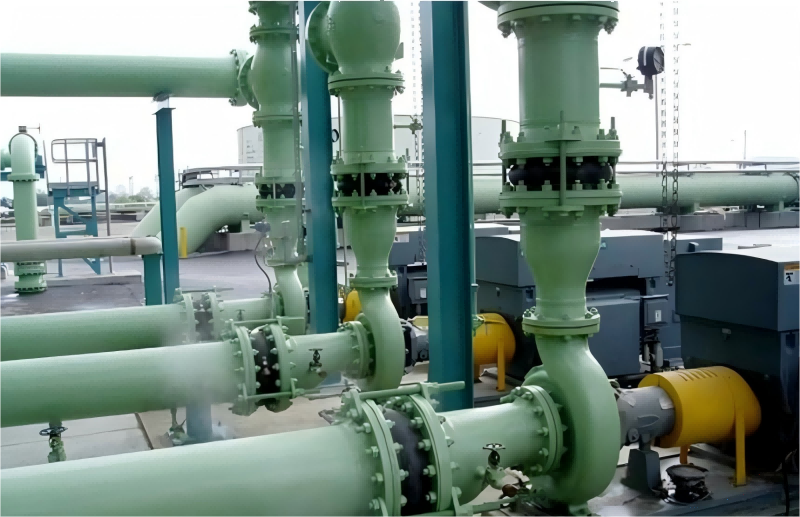
Impact that is too large or too small
If the selected pump is undersized, the flow in the system will be lower than required. This would necessitate additional pumps or adjustments to the system, such as opening the discharge valve (allowing the pump to operate at an oversized condition). An oversized pump will provide more flow than the system requires. Depending on the application, a throttle valve or impeller adjustment may be needed to reduce the flow. If the pump's operating point can be corrected simply by adjusting valves in the system, there seems to be little impact on the system. However, when considering pump efficiency, the effects of an oversized or undersized pump become more significant.
The Best Efficiency Point (BEP) is the ideal operating point of a pump, at which the maximum percentage of energy used to run the pump is transferred to the fluid. When the pump's operating point deviates from the BEP, several things happen. The most obvious effect is decreased efficiency, meaning the pump requires more driving power. The energy that is not transferred to the fluid must be released in other forms, such as heat or vibration. Therefore, as the pump's efficiency decreases, the vibration and heat generated by the pump increase. In a few cases, this has minimal impact on the pump, but the further the pump is from the BEP, the greater this effect becomes.
Centrifugal pump standards (such as the Hydraulic Institute Standard HI 9.6.3) generally recommend operating pumps within roughly 80% to 110% of the BEP (Best Efficiency Point) to avoid these effects. If operation exceeds 110% of the BEP, operators may face the risk of cavitation due to low NPSH (Net Positive Suction Head) margin, as well as damage from vibration and heat. On the other hand, operating below 80% of the BEP can lead to negative effects such as pump seizure, low-flow cavitation, internal recirculation, and high temperatures. Over time, running a pump in this manner can result in high maintenance costs, high energy costs, and a shorter pump service life. So the question arises: how can engineers effectively use design factors to avoid pumps being undersized or oversized in a system?
Carefully determine the overall design factor
One thing to consider is how much design factor the pump requires and when to apply this safety margin. Typically, several parties might consider adding design factors in the design: the system design engineer determines the system size, the project manager reviews the design, and the pump manufacturer recommends the pump. Caution should be exercised when understanding the assumptions and boundary conditions used to determine system size to prevent unintentionally defining an unreasonable design factor.
Consider operating limits
Have the size calculations and the selected design factors taken into account extreme operating conditions of the system? The system may have been effectively designed for peak flow, but does this alter the original operating point? It is important to choose a pump that allows it to operate close to the BEP under all conditions, not just for extreme operating requirements. If the system's demands change frequently, options such as adding a variable frequency drive (VFD) to the pump may need to be considered in order to keep the pump operating within the desired range.
Choose the right tool
Determining the size of a system, especially for large systems, is a complex process. Using tools that help simplify the process can reduce the chances of errors. When communicating with others and reporting information, using auto-adjustment tools can make the modeling approach clearer. An effective automated sizing tool allows engineers to quickly input manufacturer information into the design and verify through design validation that the intended equipment will operate as expected. This redundancy can prevent potentially costly mistakes. Additionally, an effective automated sizing tool allows users to quickly compare different operating scenarios and even consider multiple related design situations during the sizing process.
Summary
Designing a system that meets operational requirements is crucial. However, when it comes to designing a system, bigger is not necessarily better. Effective design not only helps reduce material and installation costs when building the system, but also prevents additional wear on components within the system, such as pumps.